
Our Craft
A wefted wig is sewn. A hand-tied wig is knotted, one strand at a time, into a mesh finer than a stocking. The difference is visible from about thirty centimetres away — which is exactly the distance at which someone looks at another person’s hairline.
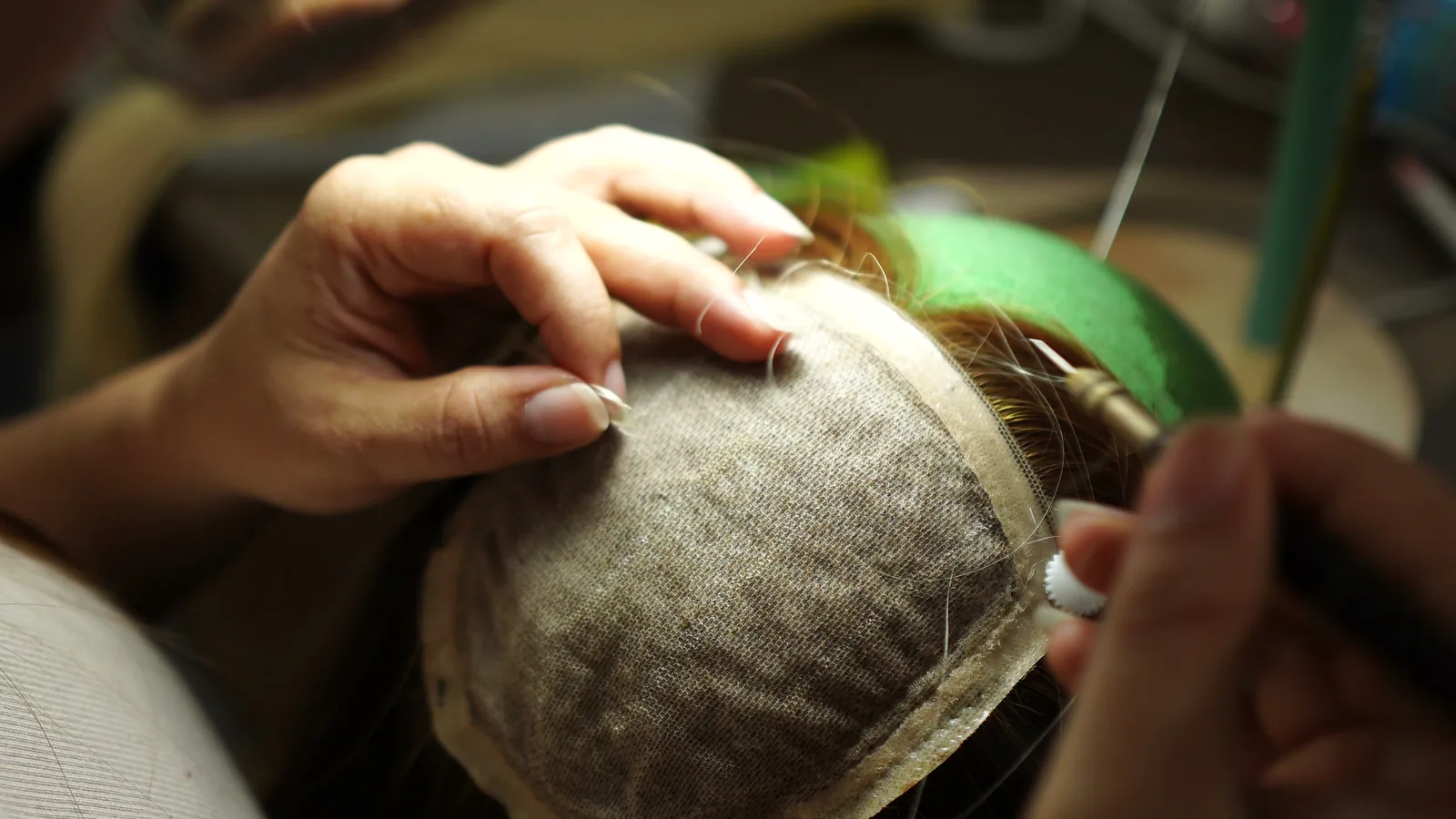
Ventilation
A ventilating needle is a hook roughly the thickness of a fishing hook. The artisan catches one to three strands, draws them through a hole in the lace, and ties them off against themselves. Then she does it again, about thirty thousand times.
On the perimeter and the parting she uses a single strand and a single knot, because that is where the eye goes. Further back she may use two or three strands, because nobody is inspecting the occipital bone and the extra density is useful.
Knot direction
Hair does not grow straight out of a scalp. It leaves at an angle, and the angle rotates as it travels across the crown, around the whorl and down toward the nape.
This is the part a machine cannot reproduce. Our artisans change the angle of the knot as they move across the cap so the finished piece falls the way real hair falls, and so a parting can be moved without exposing a row of knots facing the wrong way.
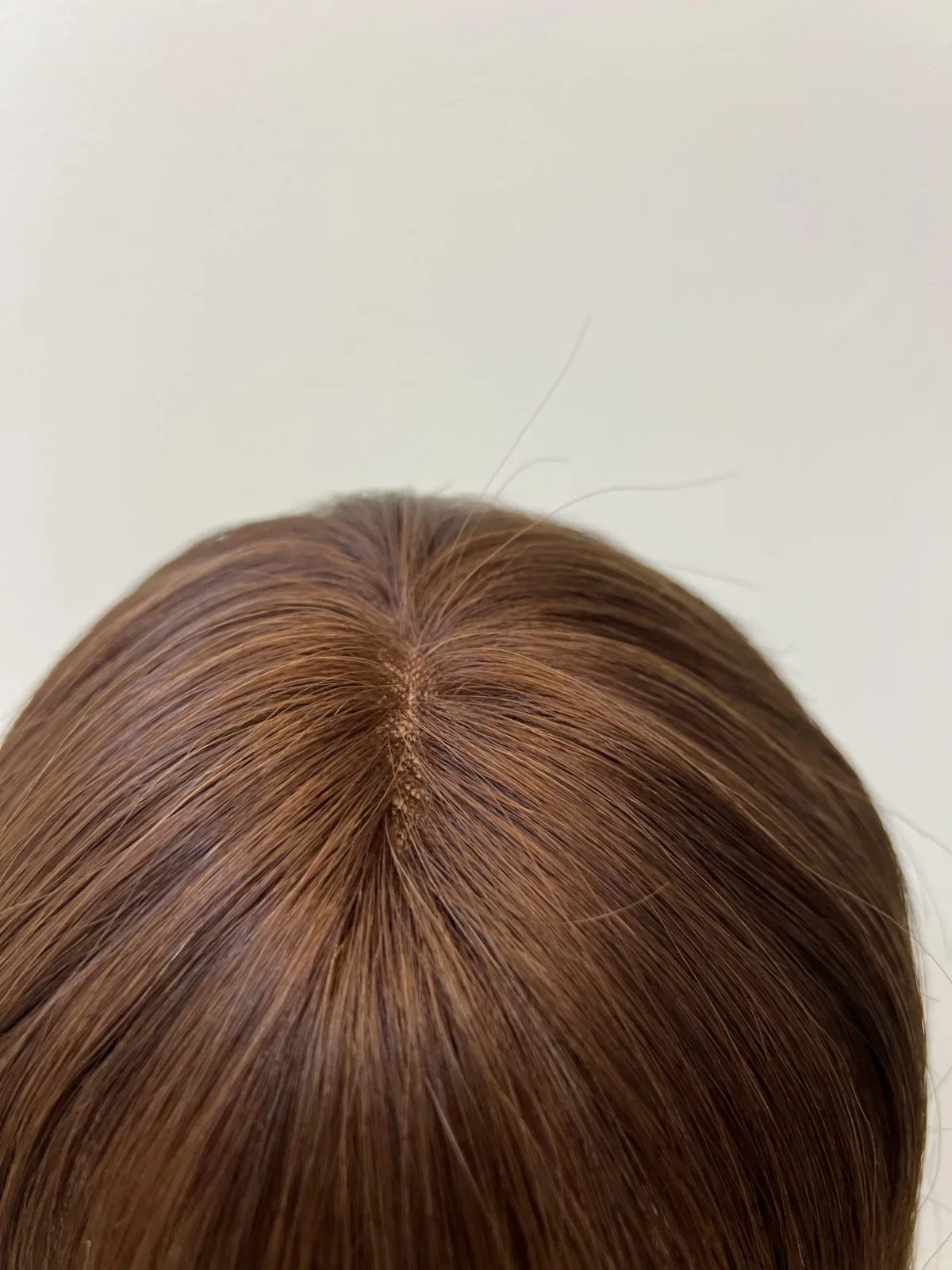
Bases
HD lace
The thinnest we work with. Nearly invisible against skin, and correspondingly fragile — we would not recommend it for a daily-wear piece that gets brushed hard.
Swiss lace
The usual compromise. Fine enough to disappear once bleached knots are done properly, strong enough to survive a client who is rough with it.
Mono & silk
For toppers. A silk base hides the knots underneath a second layer, so the parting reads as scalp rather than as mesh.
Bleached knots
A dark knot against pale lace reads as a dot. Bleaching lightens the knot so it disappears — but bleach also weakens the tie, and an over-bleached wig sheds.
We bleach the perimeter and the parting, and leave the interior alone. If you want the whole cap bleached we will do it, and we will tell you what it costs you in lifespan.
Density
Density is quoted as a percentage of a natural head of hair. 130% looks natural on camera and thin in a photograph taken with flash. 180% photographs well and looks like a wig in daylight. 150% is where most of our orders land.
Tell us where the piece will be seen and we will tell you which number to order. That conversation costs nothing and prevents most returns.
Quality control
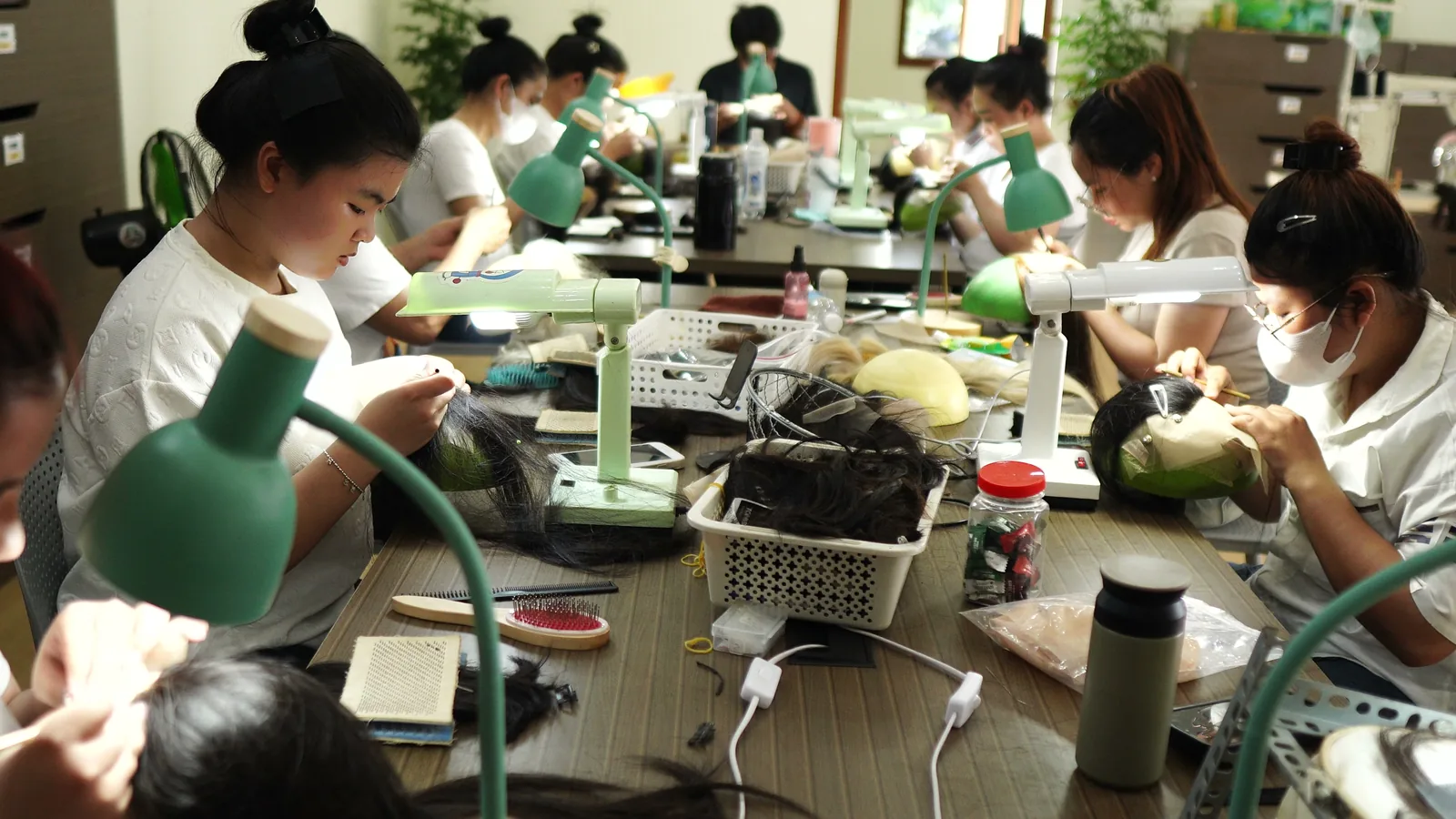
Every piece is checked against the order sheet by someone who did not make it: knot direction at the parting, density against the sample ring, cap measurement, colour under daylight and under warm light, and a comb-through to find loose knots before the customer does.
We photograph your order before it is packed and send you the images. If something is wrong, it is easier for both of us to find out while it is still in Khánh Hòa.